
How to flash using a DoIP hardware


This is an Article showing just how simple it is to flash in DTS Monaco, over DoIP (Diagnostic over Internet Protocol).

These newer units can ONLY be flashed over DoIP. Trying to flash them via CAN, will very likely brick your control unit, so that should not be attempted, under any circumstances!

A DoIP hardware is required to flash these newer units.
Such a hardware can be an SDConnect C4 DoIP, ECOM or VCX SE.

DoIP brings signifficant advantage versus CAN, by that it is much faster (eg. flashing times take a few minutes, instead of several hours, telematics disks are not needed anymore, etc etc).

Once you own the equipment, it will need to be correctly set up.

There are online guides available, that show how to set up these devices.

Following is the DTS Monaco guide on how to flash using a DoIP hardware!

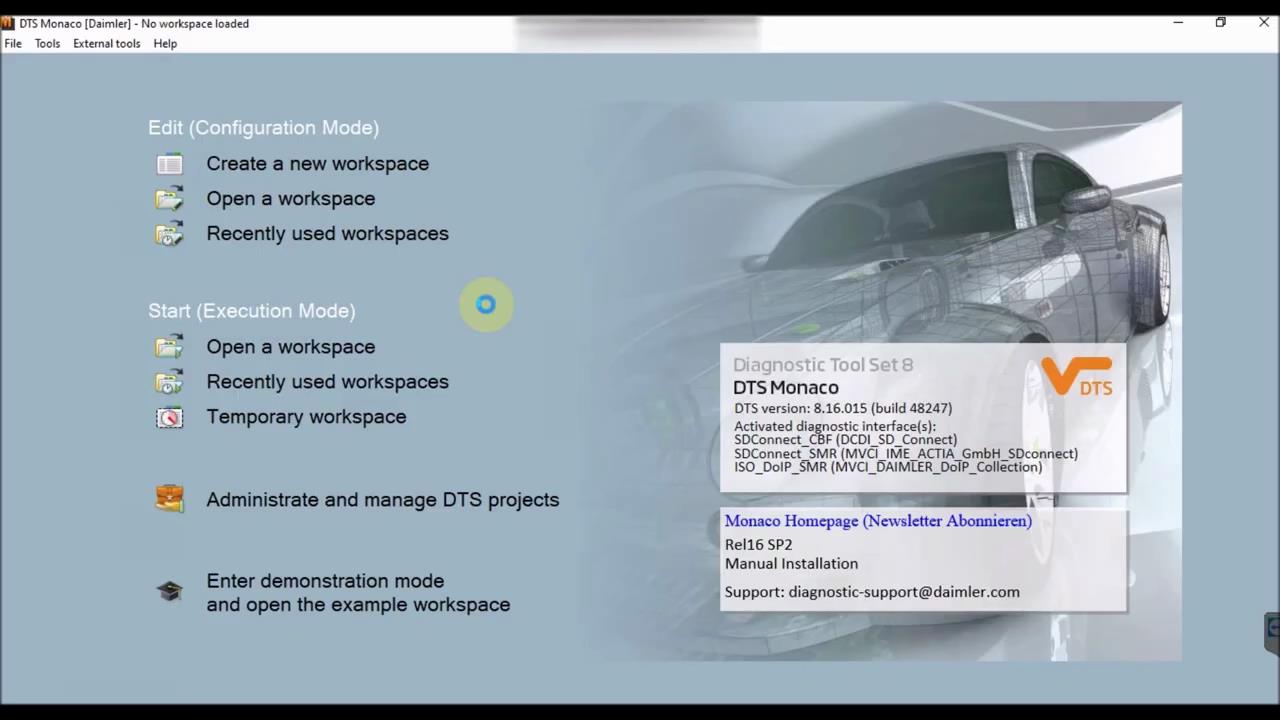
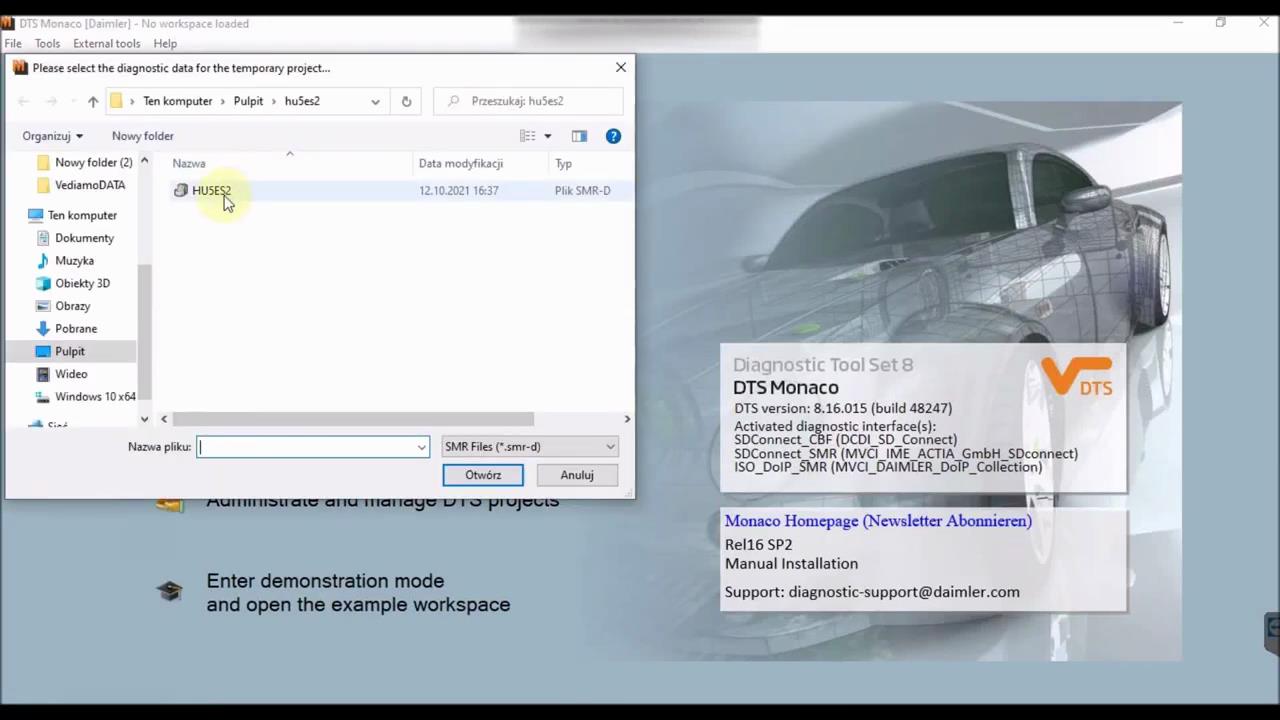
First, we’ll need to select the relevant SMR-D file, of the control unit, which we’ll be interacting with.
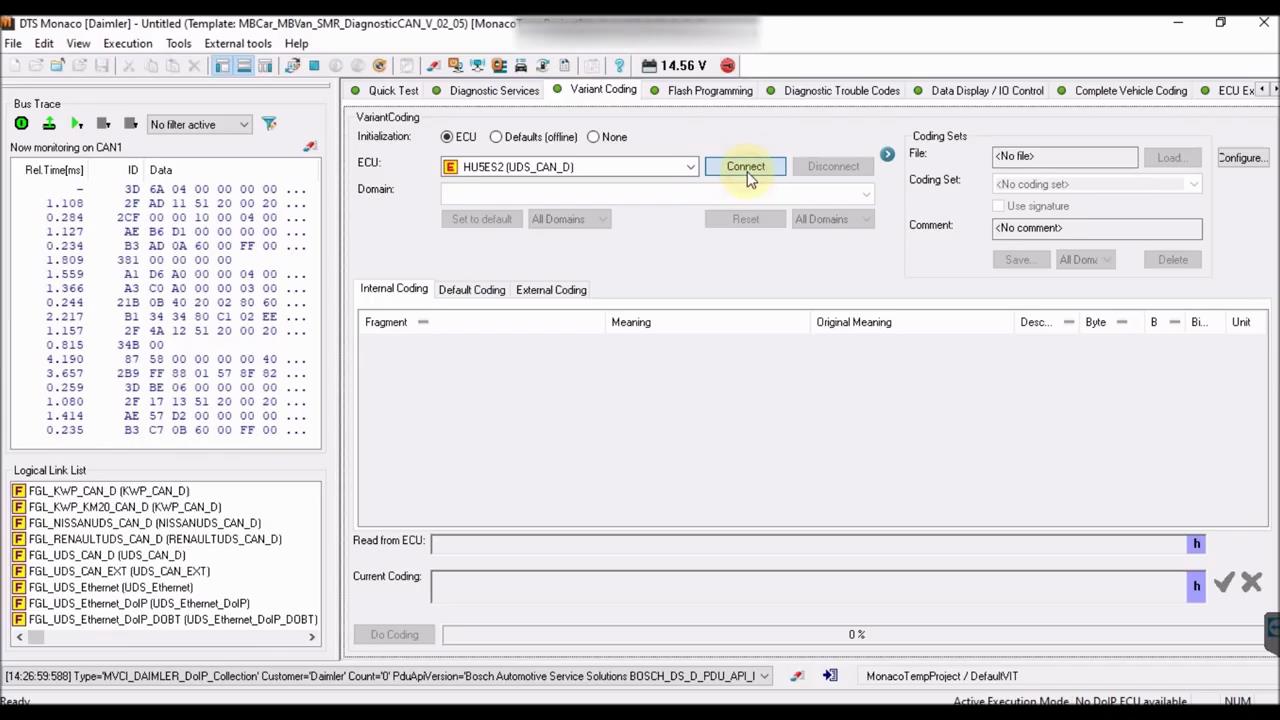
Once interfacing with the control unit, before flashing, it is always a good idea to have a backup of all the variant coding, which can be lost, during the procedure.
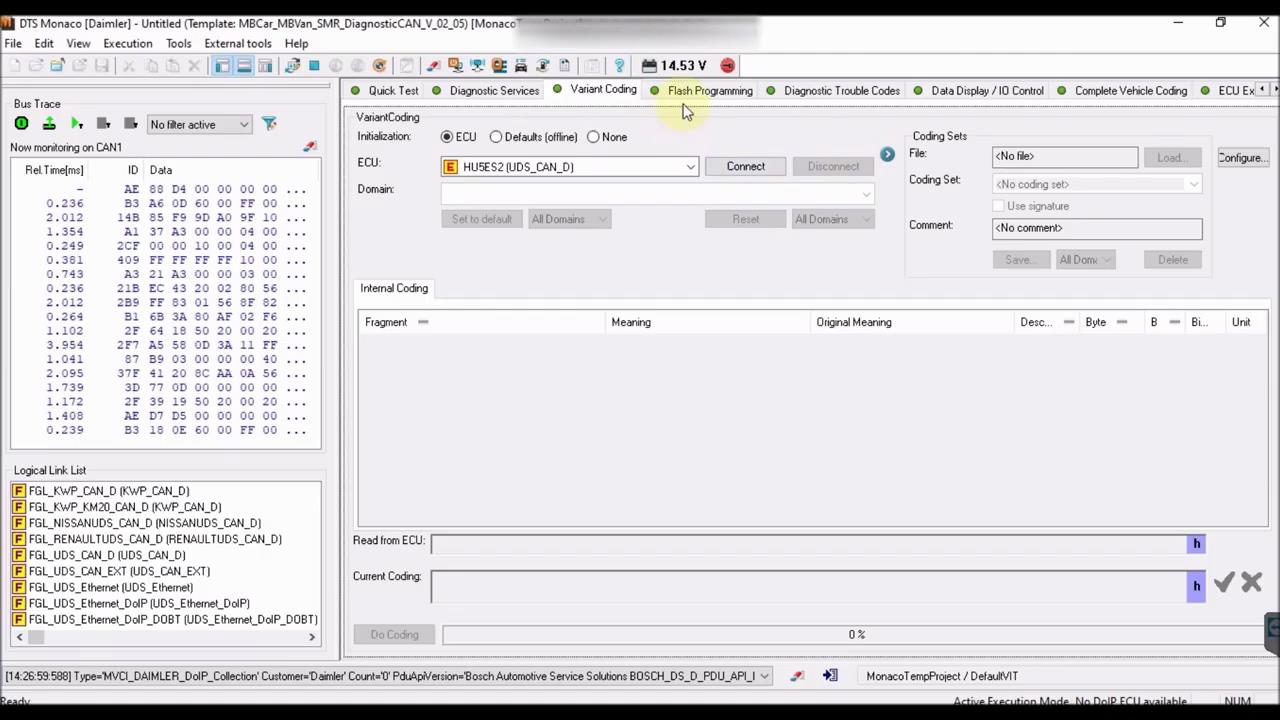
Once that is out of the way, begin the search for DoIP control units. If everything is properly set up, then you will see both the UDS_CAN and UDS_Ethernet options available.
Begin by activating the Ethernet communication, from the Execution menu.
If Ethernet activation was successful, you should see the “DOIP ECU Available” message, in green, in the bottom right side of the screen.
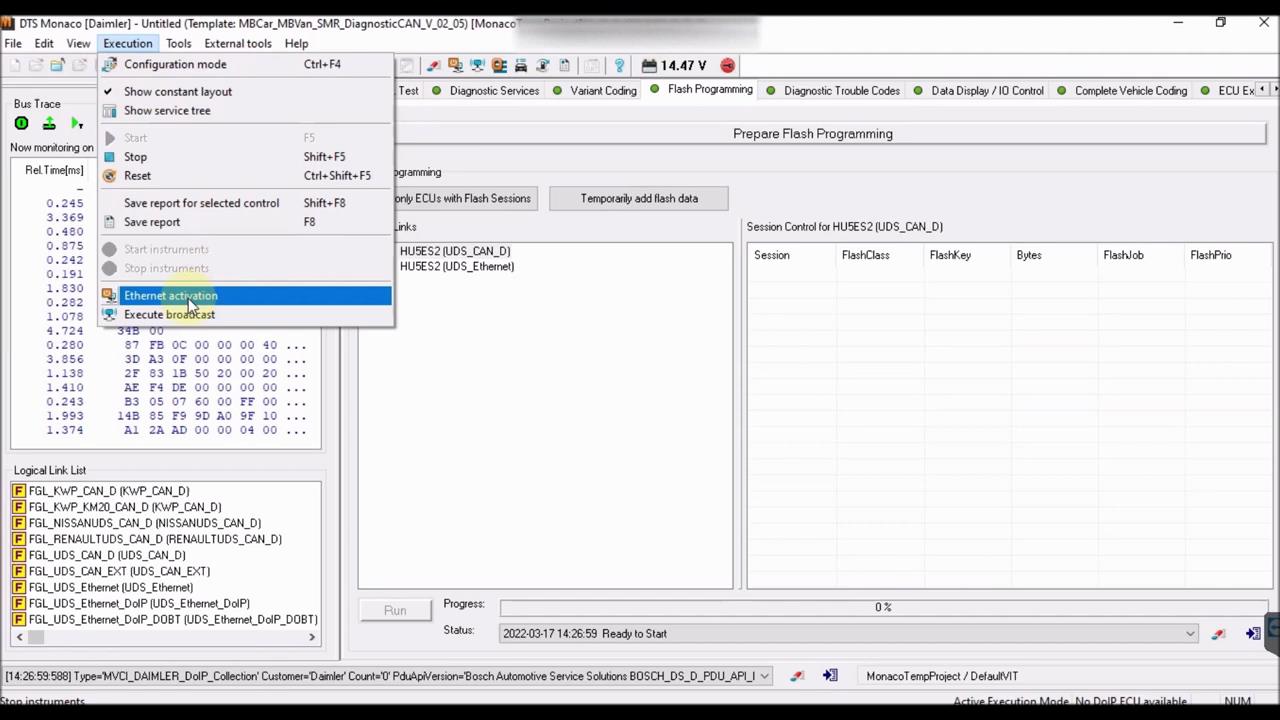
If that is not the case, attempt to send a network bradcast “Execute broadcast”, to try and wake up the control units.
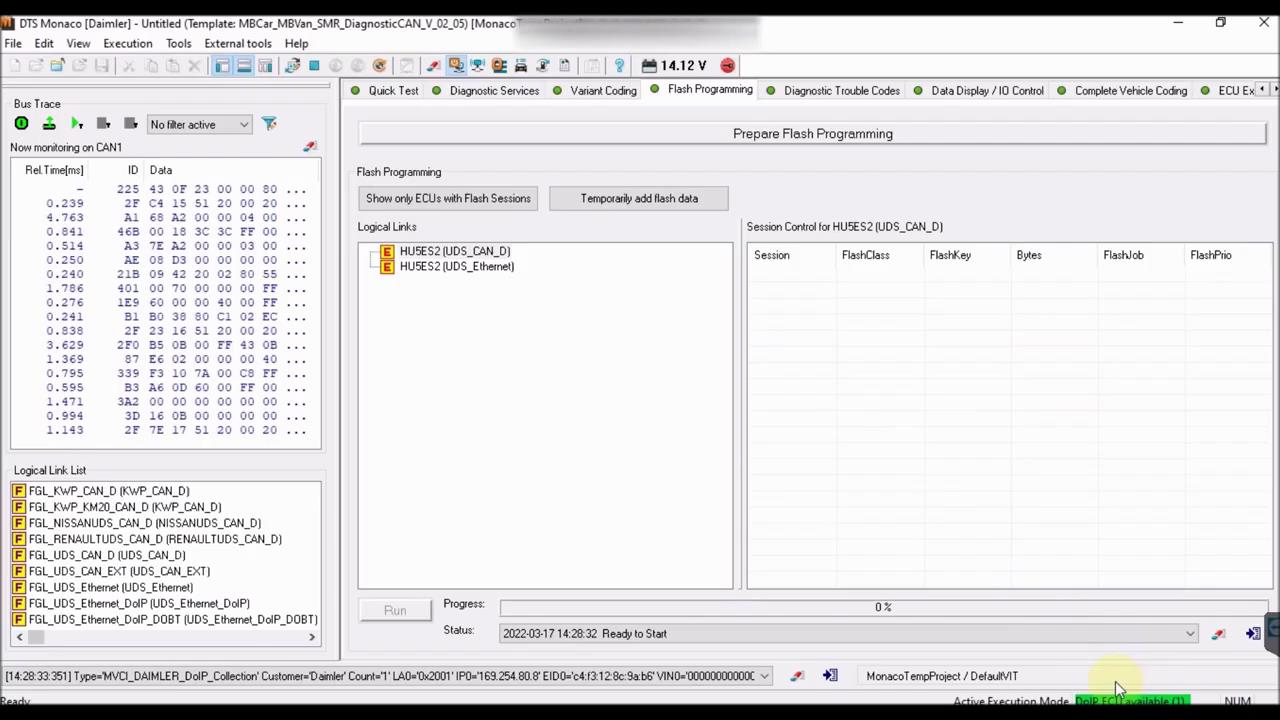
Once that is out of the way, you can begin to establish the DoIP (UDS_Ethernet) connection.
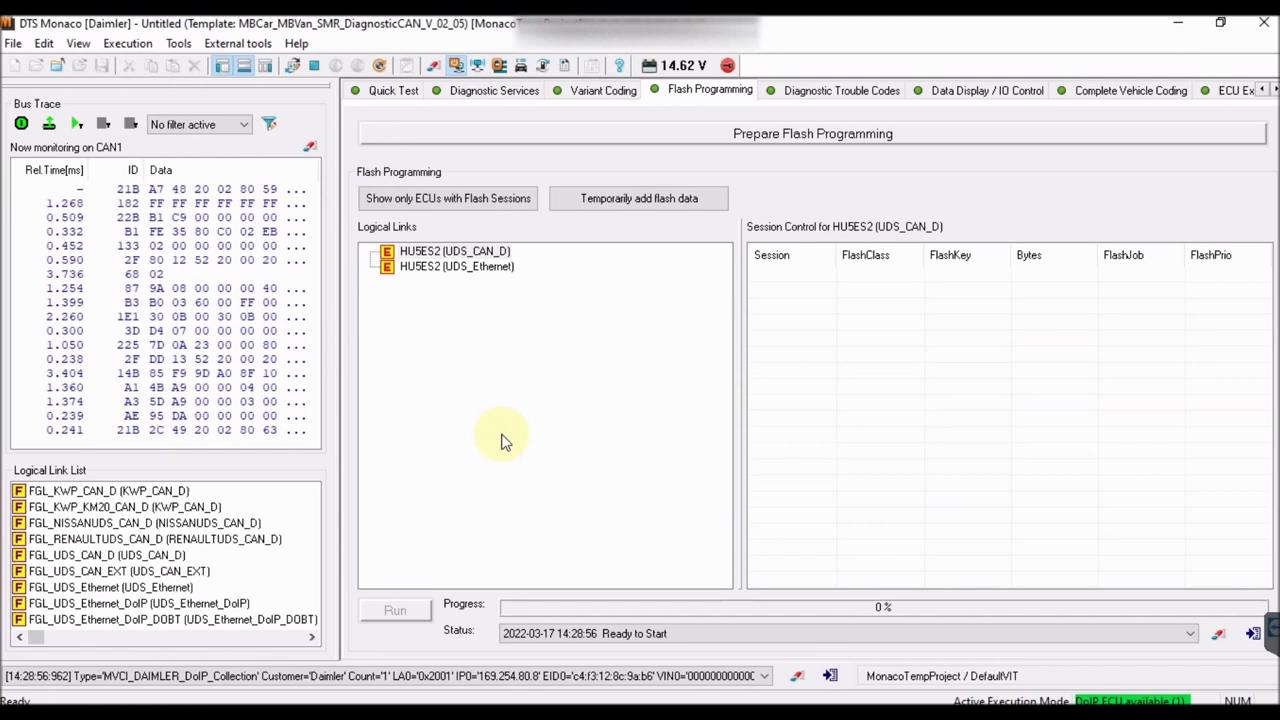
Continue by adding one or more flash files.
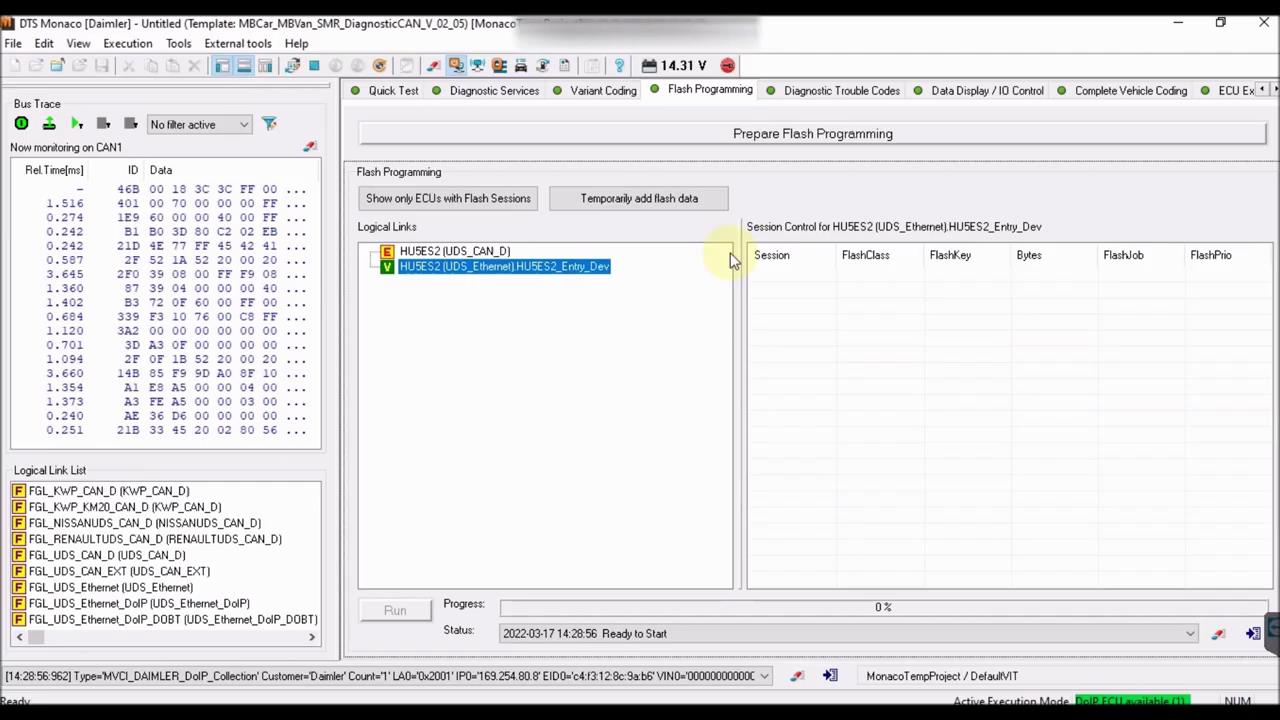
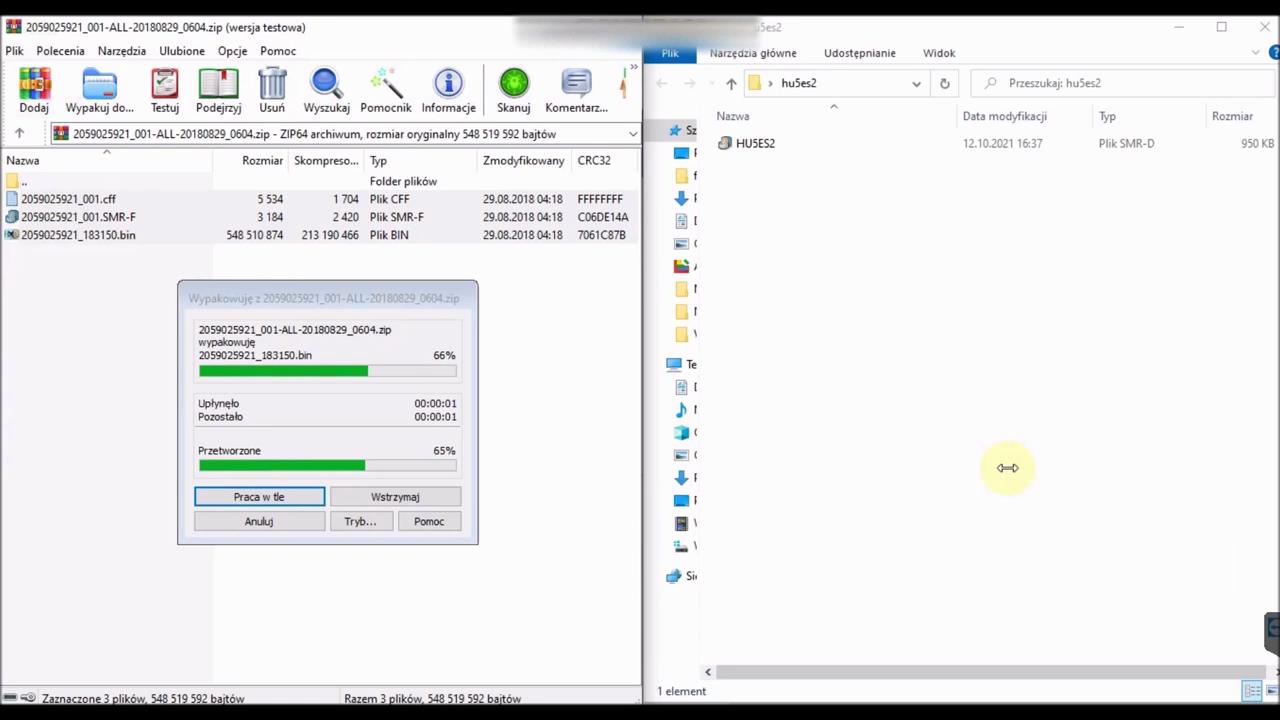
Unpack the downloaded flash files, then open them in DTS Monaco, to add them to the console.
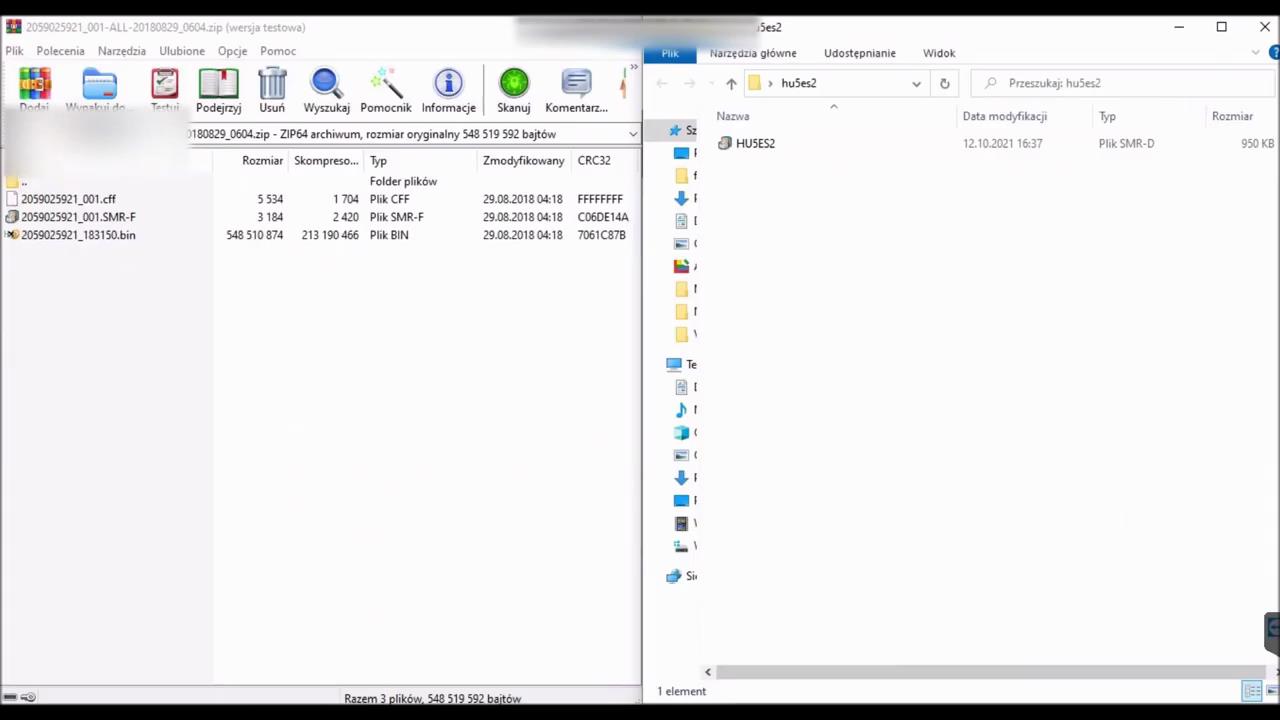
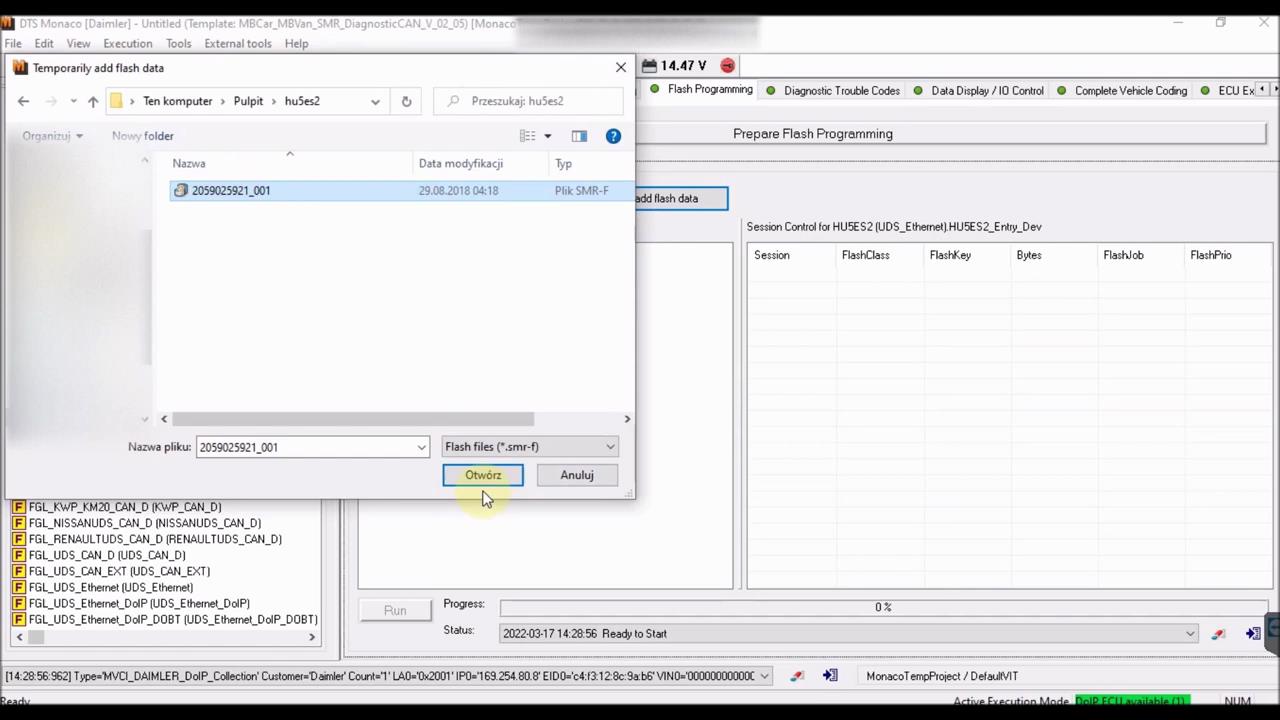
Notice how the archive contains multiple files. Simply leave them all in the same folder. Then in DTS Monaco, you will have the option to select the SMR-F file.
Once the flash file(s) have been opened, you have the option to select one or more, for flashing purposes.
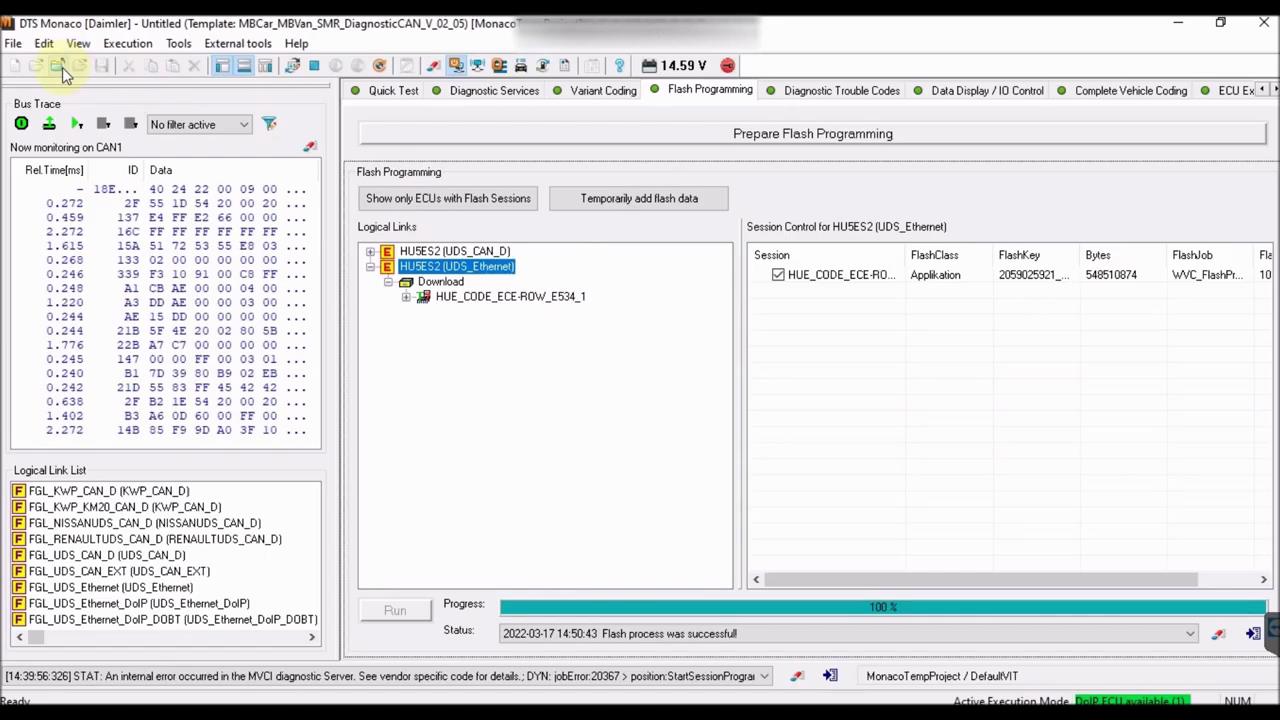
Once everything is set, press on “Prepare Flash Programming”, to put the car in this special mode.
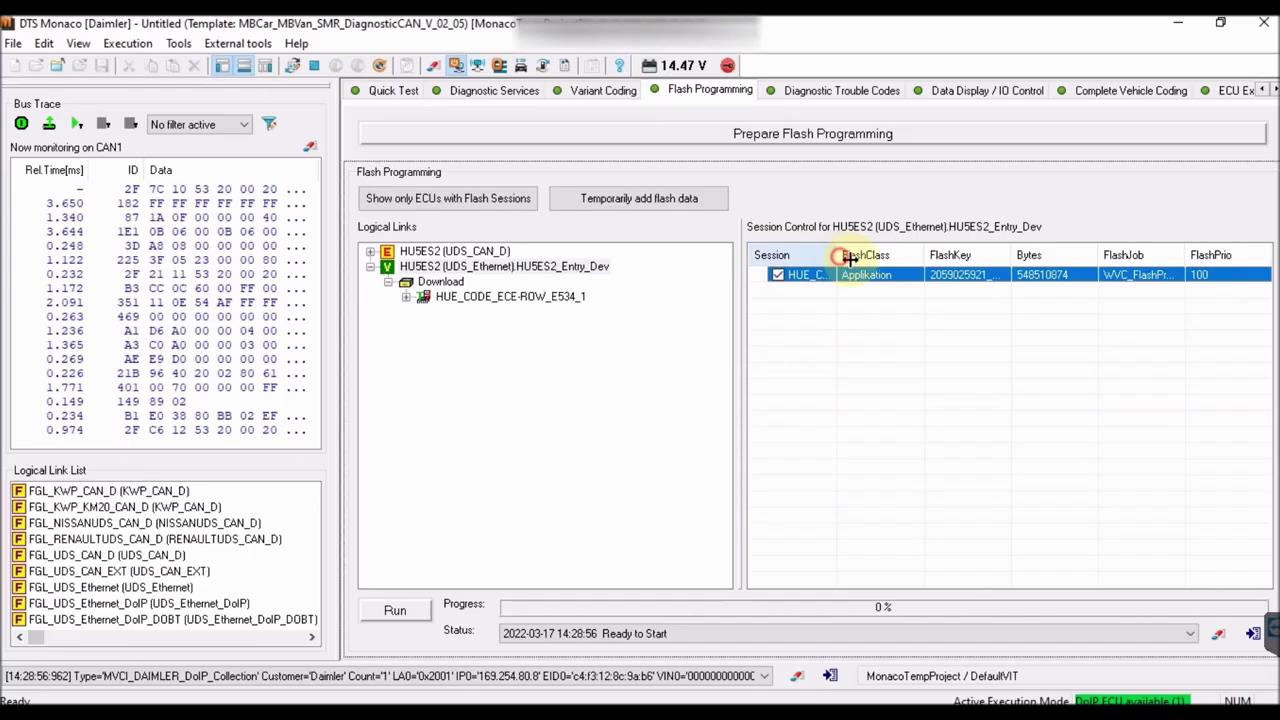
When everything is ready, car, and laptop are connected to external power source, press the RUN button.
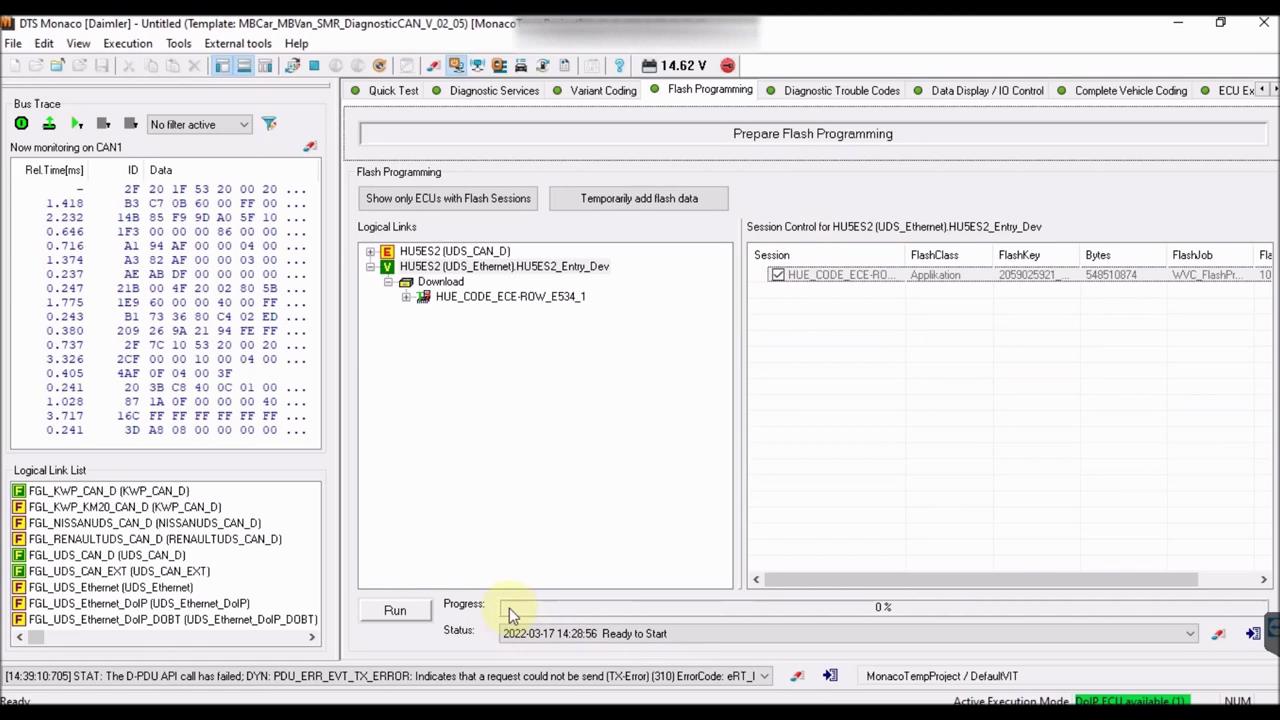
Should the process ever fail, during the flashing process, you should NOT perform a Hard Reset. Instead, simply retry, for as many times as needed. It should normally work from the first or second try.
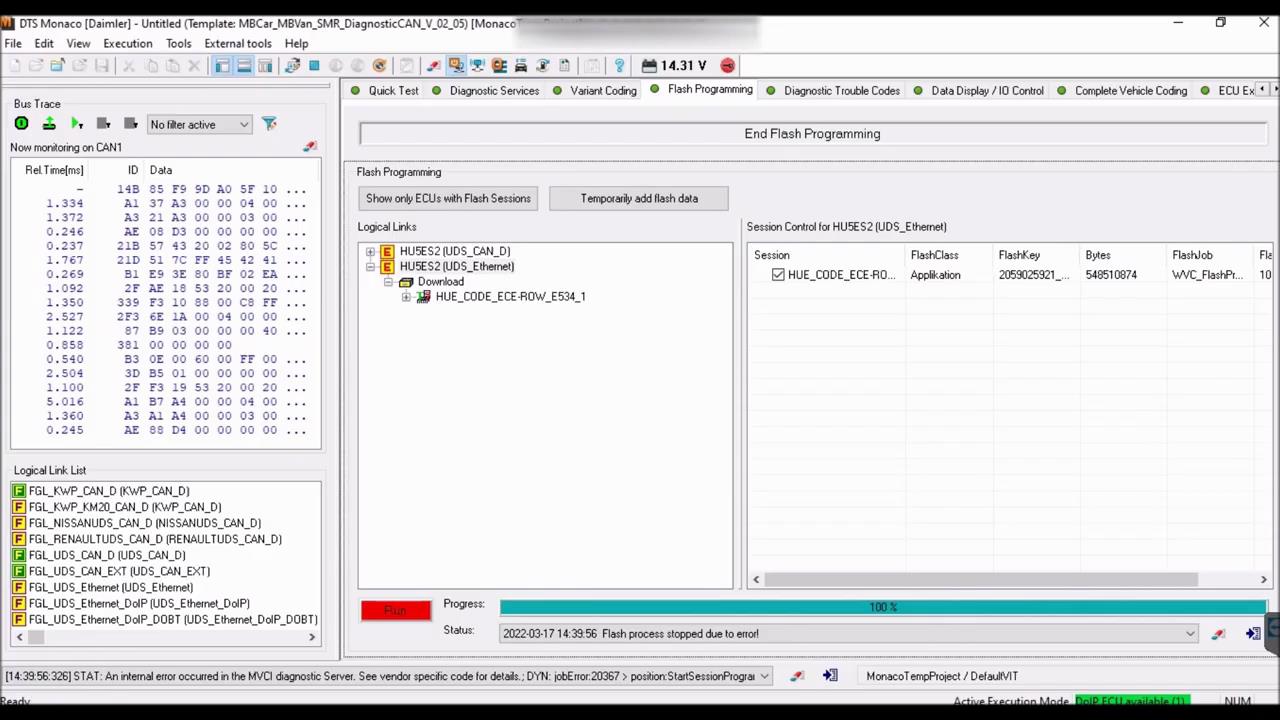
The whole procedure can take between 10 minutes and a few hours, depending on the size of the file you will be flashing. The advantage of DoIP flashing, versus CAN, is that the required time is signifficantly reduced.
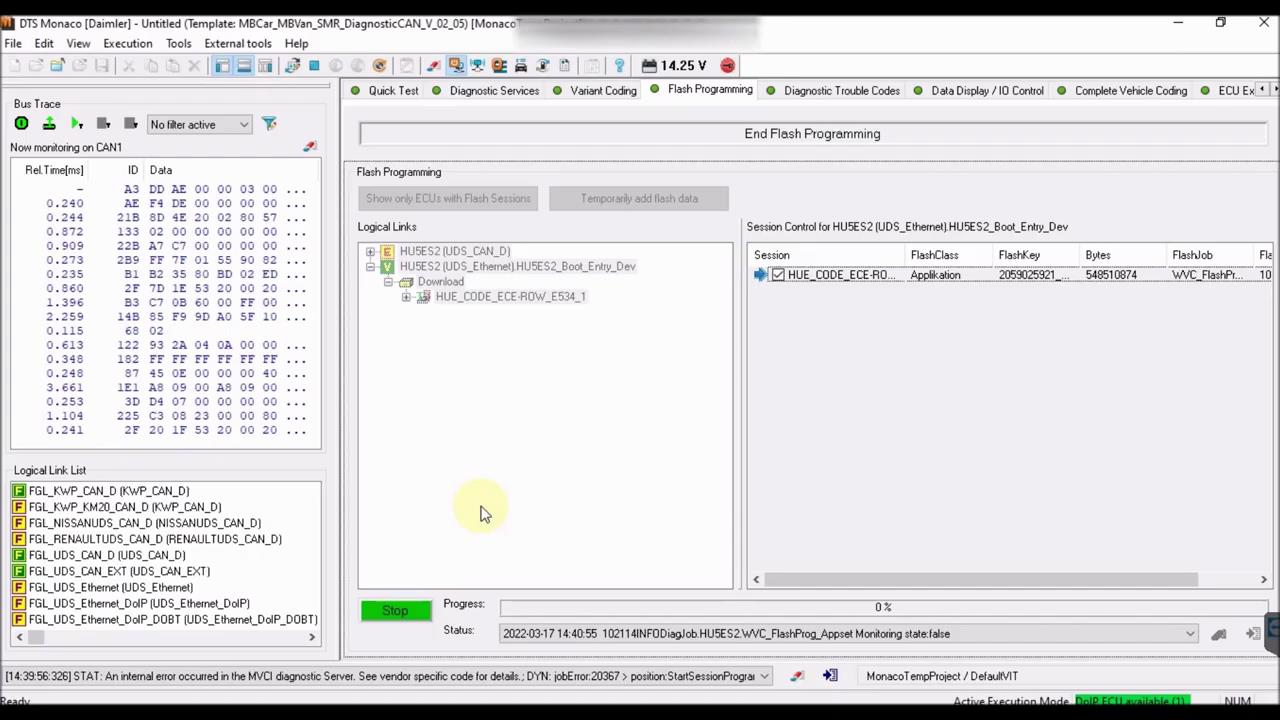
If after flashing, the headunit is Antitheft locked, simply wait a bit, then perform a hard reset. This will fix it.
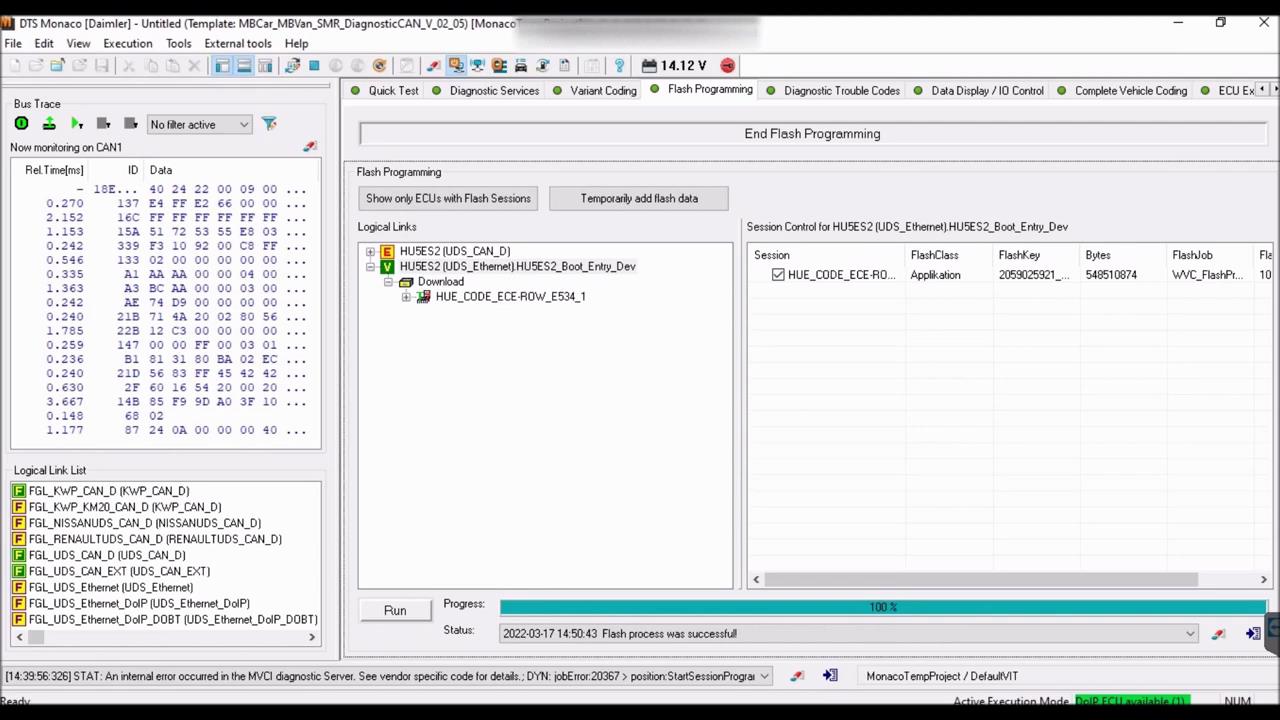
Congratulations, you now know how to flash over DoIP! To find more useful guides, visit our channel, as well as our platform at www.mbtools.me
Comments

Popular posts from this blog

How to setup BMW ISTA/P Loader for ICOM A2 ENET cable K+DCAN adapter

The text here, as a user manual of BMW ISTA/P Loader / ICOM Emulator,  is aimed to help those puzzled with ISTA/P Loader setup for  ICOM A2 , ENET cable, K+DCAN  USB interface. Note: all info here not original, shared by a forum member So try at your own risk! Main content: Part 1 – Compatible device Part 2 – Latest ISTA/P Loader update information Part 3 – How to install ISTA/P Loader v4.x Part 4 – How to use  ISTA/P loader with ICOM A2, K+DCAN cable, ENET cable Part 5 – How to shut down ISTA/P Part 1 – Compatible device: ISTA/P Loader compatible with ICOM A2 (OEM or clone), K+DCAN USB and ENET   Part 2 – Latest ISTA/P Loader update information: NEWEST – ISTA/P Loader V4.8  update info: Free download BMW ISTA-P Loader V4.8.7 to get all new info yourself …… ISTA/P Loader V4.2 update info: Custom resolution option added Improved detection of bmw scan tool ISTA-P install location. Improved compatibility with windows 10 Code...

JOHN DEERE DIAGNOSTIC OPTIONS

JOHN DEERE DIAGNOSTICS John Deere has recently been in the news because of their strict opposition to allowing farmers, equipment owners, and repair shops access to the information they need to repair and maintain their vehicles. If you read the main stream news, you would be left to believe that John Deere diagnostic with a computer is impossible. Well, we are here to help dispel that myth and give some more exposure to some tools that actually do perform diagnostics on John Deere. There are actually several solutions in the market, some of which we will cover in this post. JOHN DEERE EDL AND SERVICE ADVISOR The very best solution in the market is what the dealers use. John Deere dealers use a combination of PC-based computer with two critical components – John Deere Service Advisor software and the John Deere EDL v3 Adapter . The EDL v3 adapter looks like the picture shown below. It comes with a hard carry case, the adapter itself, a 9-pin connector, and the USB ca...

VAG 5th Immo Make Dealer Key Device, Tutorial, Wiring

Here’s the tutorial of making a dealer key to VAG 5th Immo! Done with Xhorse vvdi2 Instruction: Step 1: choose a method to read BCM2 1 connect device to the car by OBD; start to read BCM data Step 2: you can verify key black status with “Check key status” button Step 3: press button “prepare dealer key”; it requests load the BCM2 data in step 1 (important) Then put the programmable key into the vvdi2 programmer. Prepare the dealer key with tips Step 4: connect vvdi2 to the car; prepare all keys to the car Insert one key into the switch ignition, input the key number you want to learn Then press “Key learning”; it requests load the BCM2 data read in step 1 (important) Follow the tips and complete the key learning Vvdi2 starts to make a dealer key Choose a method: A4L A5 Q5 add a new key or lost all keys – No need any working key Press Ok and load BCM2 data in step 1 Put a key into the vvdi2 Start to read key info Reprogramming key info Sta...